
GAMES
Published by
Czech Games Edition
Published
Read Time
7 min read
Amazon player rating
4.8
Share This Review
Codenames 2nd Edition Review: The Word-Game Classic, Refreshed
Amazon player rating
4.8(161)
Codenames 2nd Edition refreshes Vlaada Chvátil's team-based word-association classic with a revised word list, new art, and a streamlined rulebook, per CGE. This review synthesizes the official rulebook, the Amazon listing, BGG community data, and published coverage — no hands-on play — to assess how it teaches, who it suits, and where it stumbles.
Source-grounded review: synthesized from the official rulebook, the listing, community data, and published coverage — we don't claim hands-on play, and every rating shown is attributed. How we review →
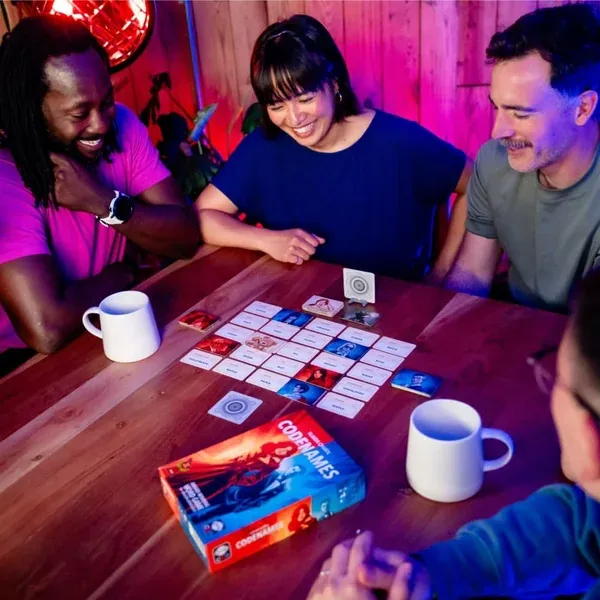
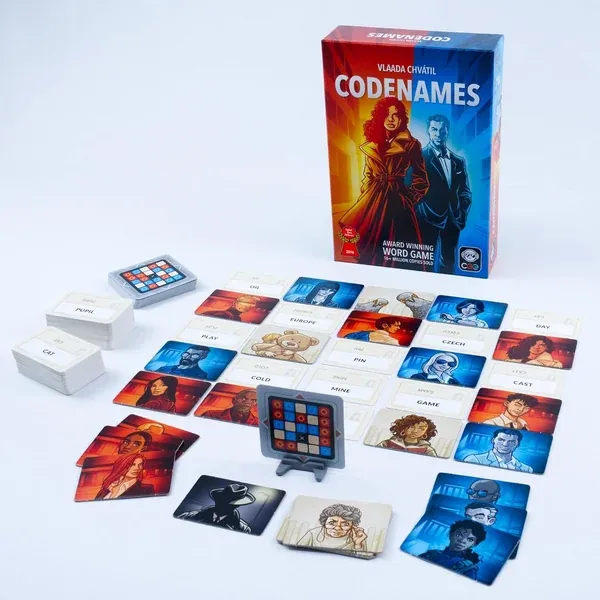
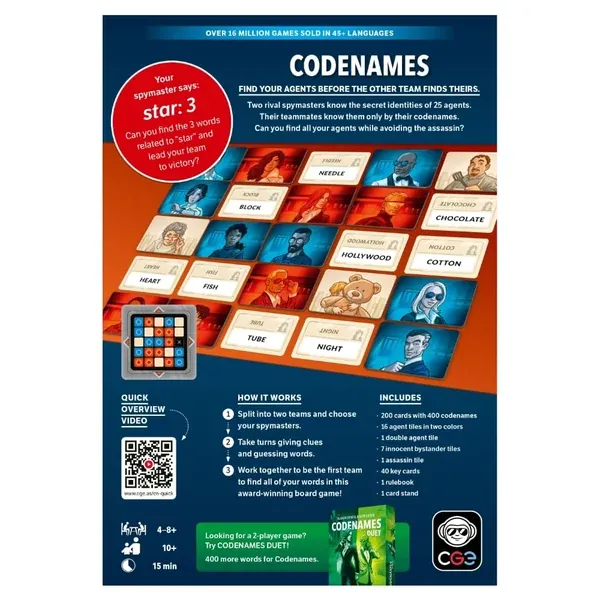 Tap to enlarge
In This Review
- What Works & What Doesn't
- What It Is
- How It Plays
- Complexity and Teachability
- Player Count Truth
- Replayability and Longevity
- Honest Limitations
- Verdict
What Works & What Doesn't
What Works
- Genuinely easy to teach — BGG weight 1.3/5, and Meeple Mountain calls it the easiest-to-teach party game in its reviewer's collection
- Structural replayability: 200 word cards and 40 double-sided key cards randomize every game (rulebook, pp. 2-3)
- The one-word-clue mechanism creates real tension, with the assassin card able to end a game instantly (rulebook, p. 5)
- Scales across large groups and splits players into teams of any size (rulebook, p. 2); BGG poll votes it best at 6
- Enormous community endorsement: BGG #6 party game, ~182,500 owners, and 4.8/5 from 161 Amazon readers
What Doesn't
- Spymaster bottleneck: the rulebook itself admits the first clue can take a couple of minutes, so a hesitant spymaster stalls the whole table (rulebook, p. 8)
- Total language dependence — BGG's community poll rates it unplayable in another language, and clue-validity rules assume shared English fluency (rulebook, p. 6)
- Thin at the bottom of the box range: the rules require two players per team (rulebook, p. 2), and BGG's poll votes it best at 6
- Debate-prone groups can drag; even a fan reviewer at Board Game Review admits the shine faded somewhat with experience
What It Is
Codenames is Vlaada Chvátil's team word game from Czech Games Edition, and this is its 2025 second edition — a refresh the publisher describes as a revised word list, new art, a better insert, and a streamlined rulebook (per CGE's product page). Two teams each field a spymaster who alone knows which of the 25 words on the table are their agents, and they guide their teammates with one-word, one-number clues (rulebook, p. 4).
The box says 2–8 players and lists a short playing time; BGG's community data pegs it at about 15 minutes and ranks it #6 among party games, with roughly 182,000 BGG users logging it as owned. Amazon readers rate this edition 4.8/5 across 161 ratings, while the BGG community rating sits at 7.5/10 from over 105,000 voters.
“the most accessible, most consistently reliable, and easiest to teach party game”
How It Plays
Setup is fast: 25 random word cards (from a deck of 200) go down in a 5×5 grid, and the two spymasters draw one random key card showing which words belong to red, which to blue, which are bystanders, and which is the assassin (rulebook, p. 2). The starting team has nine words to find, the other team eight (rulebook, p. 2).
On a turn, the spymaster says exactly one word and one number — "tree: 2" pointing at ROOT and BARK — and their operatives discuss, then guess by touching cards one at a time (rulebook, p. 4). Guessing your own color lets you keep going; hitting a bystander or an opposing agent ends your turn, and touching the assassin loses the game instantly (rulebook, p. 5).
The signature mechanism is that one-word clue itself: it must relate to the meaning of the target words, never their letters or positions, and it can't be any form of a word still visible on the table (rulebook, p. 6). The "plus one" rule lets operatives guess one card beyond the clue number, so leftover words from earlier clues can be swept up later (rulebook, p. 5).
There is no point scoring — a team wins by having all its words covered, which can even happen when the opposing team accidentally guesses the last one, or if the other team hits the assassin (rulebook, p. 5). Expert rules add "unlimited" and "zero" clues for sophisticated spymaster play (rulebook, p. 7).
Complexity and Teachability
This is about as teachable as hobby games get. BGG's community weight is 1.3/5, and Meeple Mountain calls Codenames "the most accessible, most consistently reliable, and easiest to teach party game" in its reviewer's collection.
The harder part is being spymaster, not learning the game. The rulebook itself warns that finding the first clue "may take a couple minutes" and urges patience (rulebook, p. 8), and the detailed BGG review by JanaZemankova likewise treats spymaster paralysis as the game's main learning-curve friction.
Player Count Truth
The box range is 2–8, but the rulebook requires at least two players per team (rulebook, p. 2), so low-count sessions mean minimal teams. BGG's player-count poll votes the game best at 6 players (1,105 votes).
Going the other way, a BGG community thread asks about groups larger than 8, and reviewers have reported it stretching to bigger parties informally — Board Game Review's refresh review notes it shines "with the right crowd." CGE also publishes cooperative and picture variants (Duet, Pictures), and BGG lists licensed spin-offs like the Blizzard and Back to Hogwarts editions, so the ecosystem covers most table sizes.
Replayability and Longevity
Replayability is structural: 200 word cards mean only an eighth of the deck hits the table each game, and 40 double-sided key cards randomize the identities (rulebook, pp. 2–3). Flip the 25 cards over at the end and you're set up for a fresh round (rulebook, p. 8).
Ten years on, the reception record supports that staying power — Wikipedia documents its 2015 origins and lasting footprint, and Meeple Mountain's "Games We Love" piece argues the game needed nothing new to remain brilliant.
Honest Limitations
The spymaster seat creates real downtime. The rulebook's own advice — be patient, the first clue may take a couple of minutes (rulebook, p. 8) — confirms that a hesitant spymaster stalls the whole table while everyone waits.
Language dependence is total. BGG's community poll rates it unplayable in another language, and the rulebook's validity rules (English clues only, no forms of visible words) assume shared fluency (rulebook, p. 6).
Finally, it rewards the right group more than a universal one. Board Game Review's reviewer admits enjoying it "more earlier on" in their gaming journey, and hesitant, debate-prone tables can drag — the rulebook explicitly warns against letting indecision stall play (rulebook, p. 8).
Verdict
Buy it if you host mixed groups, families, or party crowds and want a game that teaches in two minutes and supports nearly any table size — the second edition's revised word list and streamlined rulebook make it the version to get, per CGE. Skip it if your group is mostly two players, includes mixed language fluency, or chafes at waiting on one thinking player; the cooperative Codenames: Duet exists for the small-table case.
Rules questions, answered from the rulebook
How do you win Codenames?
There's no point scoring. A team wins as soon as all of its words are covered — usually by guessing its last word, but also if the opposing team accidentally guesses that word, and you also win instantly if the other team touches the assassin (rulebook, p. 5).
How many players is this book best with?
The box says 2–8, but the rulebook requires at least two players per team, so the low end means bare-minimum teams (rulebook, p. 2). BGG's community player-count poll votes it best at 6 players, and a BGG thread documents players asking about groups beyond 8.
What changed in this book 2nd Edition?
According to CGE's product page, the 2025 refresh includes a revised word list for improved gameplay, new art, a brand-new insert, and a streamlined rulebook. The publisher has not published a detailed changelist beyond that summary.
What makes a clue valid or invalid in this book?
A clue is one word plus one number, and it must relate to the meaning of the target words — never their letters, spelling, or table position. You also can't say any form of a word still visible on the table, and clues must be in English (rulebook, p. 6). An invalid clue ends the team's turn with no guesses (rulebook, p. 7).
What is the "plus one" rule?
As long as operatives keep guessing their own color, they may guess one card more than the clue number — the clue "cold: 3" allows up to 4 guesses, letting teams catch up on words missed from earlier clues (rulebook, p. 5).
How long does a game of this book take?
BGG lists it at 15 minutes, and setup is a fast 25-card grid plus one key card. The main pacing variable is spymaster thinking time — the rulebook itself notes the first clue may take a couple of minutes (rulebook, p. 8).
Sources & Further Reading
The key facts and claims in this review are grounded in the retrieved, verified sources listed below.
- 1
filemanager.czechgames.com
- 2
BoardGameGeek
- 3
store.czechgames.com
- 4
czechgames.com
- 5
en.wikipedia.org
- 6
boardgamereview.co.uk
- 7
meeplemountain.com