
GAMES
Published by
Flatout Games
Published
Read Time
6 min read
Amazon player rating
4.9
Share This Review
Cascadia Review: The Award-Winning Pacific Northwest Tile Puzzle
BGG community
7.9/10
56,398 raters
4.9 Amazon (2,262)
Cascadia is Randy Flynn's Spiel des Jahres-winning tile-and-token drafting game for 1-4 players, in which you draft paired habitat tiles and wildlife tokens to build a Pacific Northwest ecosystem. This grounded review synthesizes the Amazon listing, publisher page, BGG community data, and published reviews rather than hands-on play. It covers the paired-draft puzzle, teachability, player-count truth, and who should buy in.
Players
1–4
Best at 2 (562 votes)
Playtime
30–45 min
Complexity
1.8/5
1,602 votes
BGG rating
7.9/10
56,398 raters
BGG rank
#60
#1 Abstract Game
Age
8+
community poll (148)

Source-grounded review: synthesized from the listing, community data, and published coverage — we don't claim hands-on play, and every rating shown is attributed. How we review →
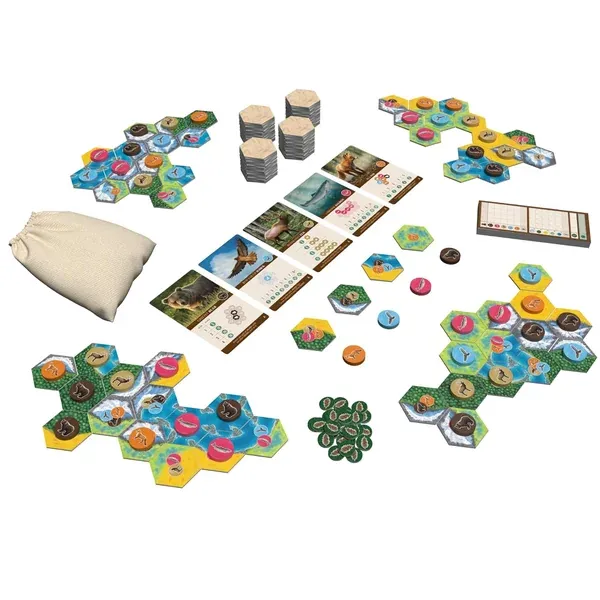
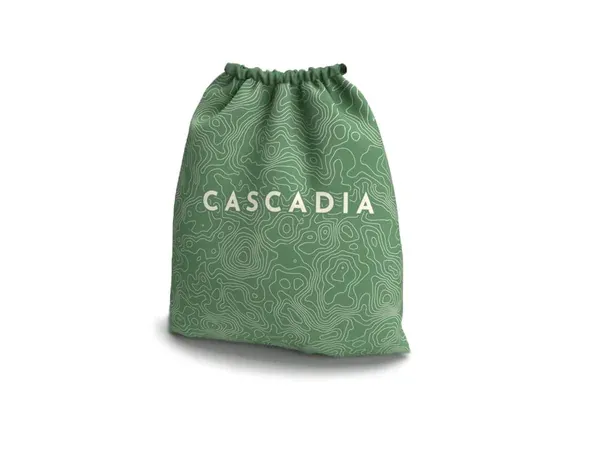
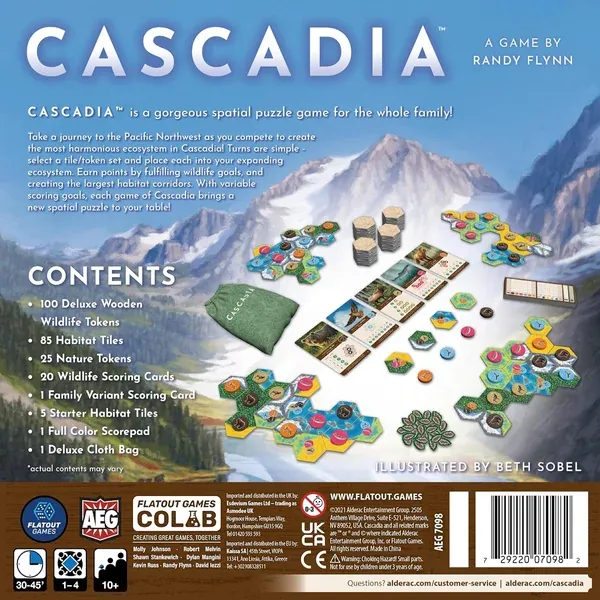 Tap to enlarge
In This Review
- What Works & What Doesn't
- What Cascadia Is
- How Cascadia Plays
- Complexity and Teachability
- Player Count
- Replayability
- Honest Limitations
- Verdict
What Works & What Doesn't
What Works
- Exceptionally easy teach — the listing claims two minutes, and One Board Family calls the rules among the simplest it has reviewed
- Dual-layer puzzle depth: balancing habitat corridors against wildlife placement rewards repeat plays (Flatout Games)
- Award pedigree: Spiel des Jahres 2022, American Tabletop Best Strategy 2022, BGG Light Game of the Year 2021 (listing)
- Strong community standing: BGG 7.9/10 from 56,000+ voters, ranked #1 in Abstract; Amazon readers' aggregate 4.9/5
- Flexible player counts with a real solo mode (BGG mechanisms) and a family mode for new gamers (listing)
What Doesn't
- Interaction is indirect — each player builds a separate ecosystem (per Flatout Games), so it can feel like parallel puzzling for those wanting confrontation
- Open drafting injects luck — the tile/token pair a plan needs can be taken or never appear
- Thinkier than the cozy pitch suggests — WhatBoardGame describes the puzzle ambushing players expecting a light filler
Cascadia is a tile-and-token drafting game set in the Pacific Northwest, designed by Randy Flynn and published by Flatout Games, in which players build habitat corridors and attract wildlife to their own growing ecosystem. This review synthesizes the Amazon listing, the publisher's page, BoardGameGeek community data, and published coverage — it is not based on independent hands-on play. That grounding matters here, because the sources available are unusually consistent about what this game does well.
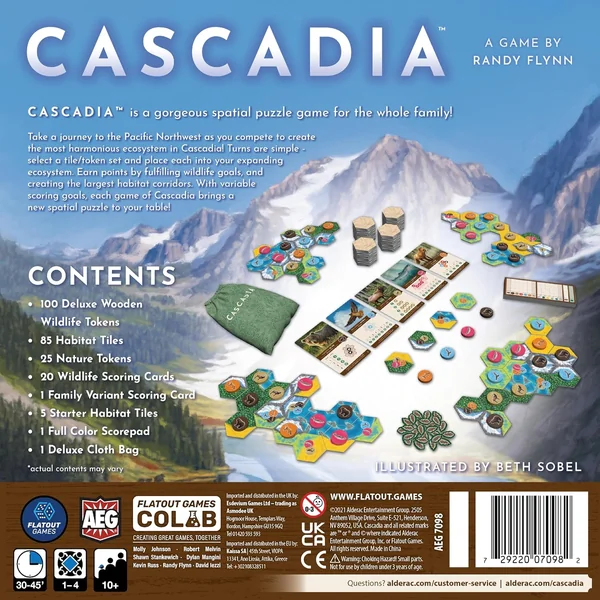
Cascadia's game components and Pacific Northwest ecosystem theme
What Cascadia Is
The listing pitches Cascadia for 1-4 players, ages 10+, at 30-45 minutes, and BGG's listed playtime agrees at 45 minutes (range 30-45). It won the Spiel des Jahres in 2022, the American Tabletop Award for Best Strategy Game, and BGG's Light Game of the Year, per the listing. BGG's community rates it 7.9/10 across more than 56,000 voters, ranks it #60 overall and #1 in Abstract Game, and Amazon readers give it a 4.9/5 aggregate from 2,262 ratings.
“the most simple of any game that I've reviewed in a while.”
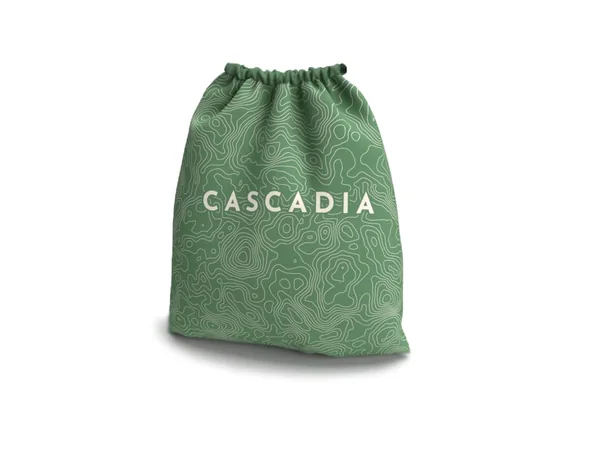
Cascadia's drawstring storage bag for game components
How Cascadia Plays
Setup is variable: BGG lists Variable Set-up and Open Drafting among the game's mechanisms, and each player assembles their own separate ecosystem over the course of play (per Flatout Games). The signature mechanic is the paired draft — on a turn, a player chooses a habitat tile and wildlife token offered together as a pair, then adds both to their environment. Flatout's Alpine Lakes page confirms this same core turn structure carries into the follow-up, so it is the game's identity, not a detail.
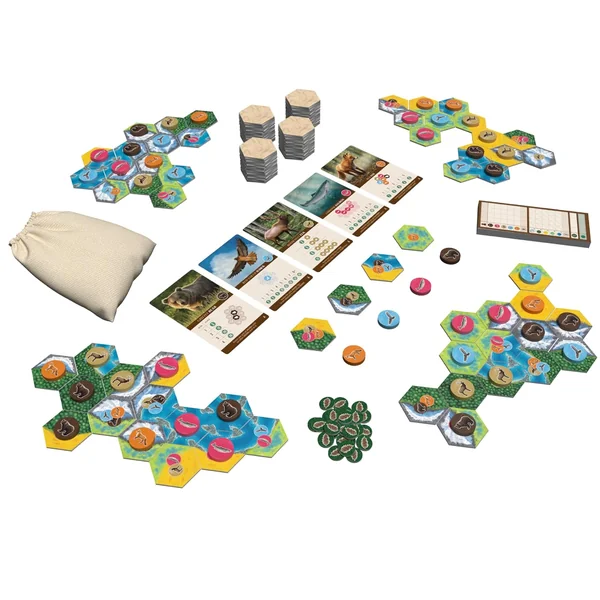
Cascadia's hexagonal habitat tiles, tokens, and player boards
Scoring is a dual-layer puzzle, in the publisher's words. Players balance building habitat corridors against placing wildlife in the best possible configurations (listing), and BGG also lists End Game Bonuses among the mechanisms. The tension between those two layers is what reviewers respond to: WhatBoardGame notes the game lulls you into expecting "a quick game of this, nothing too thinky" before "the puzzle hits you."
Complexity and Teachability
The listing claims a two-minute teach, and One Board Family backs that up, calling the rules "the most simple of any game that I've reviewed in a while." BGG's complexity weight sits at 1.8/5 from 1,602 votes, squarely in light territory. Board Game Review frames it as an ideal midweek unwind that still "gives the grey cells something to do."
The caveat is that simple rules are not the same as simple decisions. The same WhatBoardGame review describes a game whose spatial puzzle sneaks up on players, so expect first plays to run toward the longer end of the 30-45 minute range while the scoring tensions click.
Player Count
The box says 1-4, and BGG's player-count poll — 562 votes — says it plays best at 2. Solo play is real rather than nominal: BGG lists Solo/Solitaire Game among its mechanisms. The listing also advertises a family mode for newer gamers.
Replayability
Replay variety comes from the variable setup and what the listing describes as multiple ways of scoring points, so each game's balance between corridor-building and wildlife placement shifts. BGG's catalog also documents official expansions — Cascadia: Landmarks and several promo card sets — plus standalone spin-offs Cascadia Junior and Cascadia: Alpine Lakes, so the system extends beyond the base box.
Honest Limitations
Documented criticism of Cascadia is genuinely scarce — the retrieved reviews are uniformly warm — so the drawbacks below are structural rather than consensus complaints. First, because each player builds an individual ecosystem (Flatout Games), interaction is indirect; players who want confrontation or blocking will find a parallel puzzle. Second, the open draft means the tile-token pair a plan depends on can be taken by an opponent or simply never surface, which injects luck into an otherwise contemplative game.
Third, the cozy framing undersells the thinkiness — one reviewer's experience of being ambushed by the puzzle is a fair warning for anyone buying it purely as a light filler.
Verdict
Cascadia suits families, couples, and groups who want a calm, quick-teaching spatial puzzle with enough depth to reward repeat plays — the SdJ win and BGG's 56,000-voter rating suggest that audience is large. Players who crave direct conflict, heavy strategy, or tight mitigation of luck should look elsewhere.
Questions & answers, grounded in our sources
How many players is Cascadia best with?
The box supports 1-4 players, but BoardGameGeek's player-count poll — 562 votes — says Cascadia plays best at 2. BGG also lists a Solo/Solitaire mechanism, so the one-player mode is a real option rather than an afterthought, per BGG's mechanism data.
How long does this game take to learn and play?
The Amazon listing claims you can teach it in two minutes, with games lasting 30-45 minutes; BGG's listed playtime agrees at 45 minutes (range 30-45). BGG's community complexity weight is a light 1.8/5 from 1,602 votes, and One Board Family called the rules among the simplest it had reviewed — though WhatBoardGame cautions the spatial puzzle is deeper than the quick teach implies.
Does this game have a solo mode?
Yes. BoardGameGeek lists Solo/Solitaire Game among Cascadia's mechanisms, and the Amazon listing's 1-4 player range confirms single-player support on the box.
Are there expansions or follow-up games for this game?
BoardGameGeek lists several official add-ons: the Cascadia: Landmarks expansion (plus a Landmark Scoring mini-expansion) and a couple of promo card sets. BGG also catalogs standalone spin-offs — Cascadia Junior and Cascadia: Alpine Lakes — with Flatout Games describing Alpine Lakes as a follow-up using double-hexagon habitat tiles.
Should I buy this game, this game Junior, or this game: Alpine Lakes?
Per BoardGameGeek, both are official reimplementations rather than expansions. Cascadia Junior targets younger players, while Flatout Games' Alpine Lakes page presents it as a familiar-turn-structure sequel built on double-hexagon tiles; sources retrieved don't detail Junior's rule changes, so cross-shoppers should check the publisher pages directly.
Sources & Further Reading
The key facts and claims in this review are grounded in the retrieved, verified sources listed below.
- 1
BoardGameGeek
- 2
flatout.games
- 3
flatout.games
- 4
flatout.games
- 5
boardgamereview.co.uk
- 6
whatboardgame.com
- 7
oneboardfamily.com