
GAMES
Published by
Stonemaier Games
Published
Read Time
6 min read
Amazon player rating
4.8
Share This Review
Wingspan Review: The Engine-Builder That Made Birding a Hobby Hit
Amazon player rating
4.8(12,798)
Wingspan is Elizabeth Hargrave's Kennerspiel-winning engine-builder about attracting birds to a wildlife preserve — a game whose theme, art, and accessibility made it one of the hobby's biggest hits. This review synthesizes the Amazon listing, Stonemaier's pages, BGG community data, and published coverage; no hands-on play was involved. We cover how the engine works, the real best player count, and who should look elsewhere.
Source-grounded review: synthesized from the listing, community data, and published coverage — we don't claim hands-on play, and every rating shown is attributed. How we review →
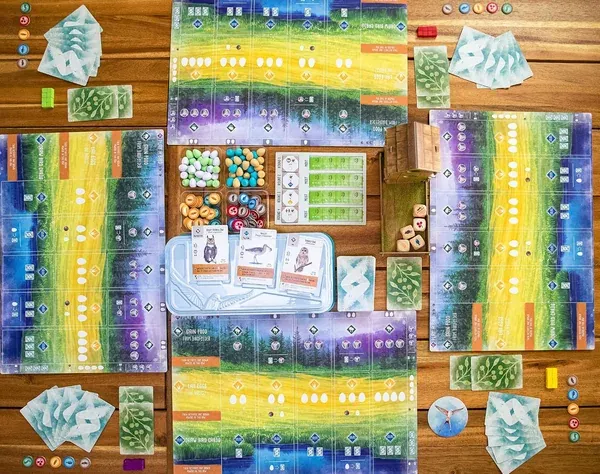

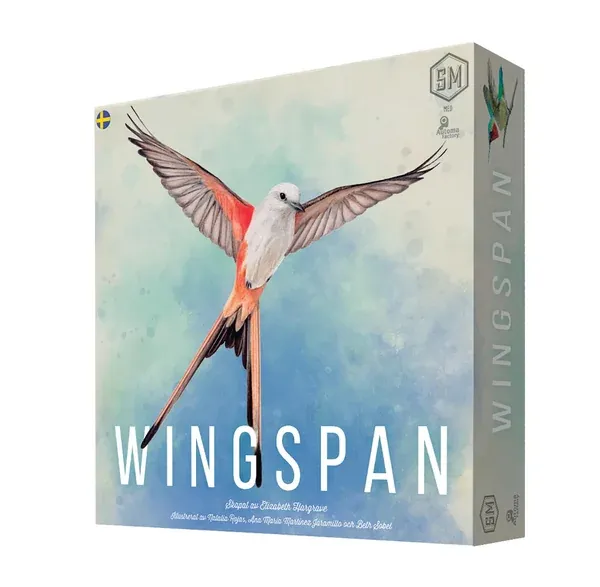 Tap to enlarge
In This Review
- What Works & What Doesn't
- What Wingspan Is
- How It Plays
- Complexity and Teachability
- Player-Count Truth
- Replayability and Longevity
- Components and Theme Integration
- Honest Limitations
- Verdict
What Works & What Doesn't
What Works
- Theme-integrated card design — nest type, egg capacity, food cost, and powers all mirror each real bird's nature (per the listing)
- Teachable medium-weight game: BGG community weight 2.5/5, a swift-start guided first game, and praise from TabletopMom for its quick setup and fast turns
- Standout components and art: birdfeeder dice tower, colored egg miniatures, realistic illustrations by Natalia Rojas, Ana Maria Martinez Jaramillo, and Beth Sobel
- Deep replayability on paper: 170+ unique bird cards, 26 bonus goal cards, and 8 goal tiles shift priorities every game
- Validated at scale: 2019 Kennerspiel des Jahres winner, 8.0/10 from 114,000+ BGG voters, 4.8/5 from nearly 12,800 Amazon readers
What Doesn't
- Card powers are text-heavy — BGG's language-dependence poll flags "extensive use of text," a hurdle for younger players and mixed-language groups despite the family framing
- "Relaxing" marketing undersells it: Stonemaier's own page calls Wingspan competitive and medium-weight, and BGG's 2.5/5 community weight is denser than a casual family game
- Box range vs. community consensus: BGG's player poll votes 3 players best, so the 1-5 range stretches past the sweet spot
- Playtime swings widely — publisher cites 40-90 minutes — so early learning games can run long relative to the 70-minute box figure
What Wingspan Is
Wingspan is a competitive, medium-weight, card-driven engine-building game from designer Elizabeth Hargrave and Stonemaier Games, built around attracting birds to a wildlife preserve. The listing frames it for 1-5 players in 60-90 minutes; Stonemaier's store page gives a wider 40-90 minute range, and BGG lists 70 minutes with a 40-70 spread.
Its pedigree is unusually well documented. The listing and Stonemaier both note it won the 2019 Kennerspiel des Jahres, and the BGG community rates it 8.0/10 across more than 114,000 voters, ranking it #38 overall. Amazon readers aggregate to 4.8/5 from nearly 12,800 ratings.
“activating one bird after another, laying eggs, chucking out food and tucking away birds.”
How It Plays
Setup is quick — the listing claims about six minutes — and players begin with a personal preserve playmat divided into habitats. On a turn you take one of a small set of actions: gain food via custom dice rolled in a birdfeeder dice tower, lay egg miniatures, draw bird cards, or play birds into a habitat, paying their food costs (per the listing).
The signature mechanic is the engine: each bird played extends a chain of combinations in its habitat, so later actions in that row trigger every bird's power in sequence. We're Not Wizards captures the payoff at game's end, describing "activating one bird after another, laying eggs, chucking out food and tucking away birds."
Scoring, per the listing and coverage, accumulates from the birds played, eggs laid, tucked cards, and bonus goal cards — the game ships with 26 bonus cards and 8 goal tiles that shift what each game rewards. The exact scoring formula isn't spelled out in our sources, but the structure (bird points plus variable goals) is consistent across the listing and publisher description.
Complexity and Teachability
BGG's community weighs Wingspan at 2.5/5 — solidly medium. TabletopMom calls it "a breeze to learn and teach," crediting a strong rulebook, a simple ruleset, and fast turns once players grasp the four core actions.
Stonemaier's store page confirms the current printing includes the swift-start pack, a guided first-game walkthrough the listing also highlights. That combination of aids and a 2.5 community weight suggests a teachable game, though first sessions should be expected toward the longer end of the 40-90 minute range.
Player-Count Truth
The box says 1-5, and a solo Automa mode — which flips a card each turn to simulate an opponent — is described on the listing. BGG's player poll, however, votes 3 players as best (1,244 votes), a narrower sweet spot than the full range implies.
There's genuine disagreement in coverage. A Meeple Mountain reviewer writing about Wingspan Asia called two players "my favorite player count," so the community's best-at-3 consensus isn't universal.
Replayability and Longevity
The replay case rests on hard numbers from the listing: over 170 unique bird cards, 26 bonus goal cards, and 8 goal tiles that change scoring priorities between games. BGG also documents a long tail of official content — the European and Americas expansions, plus spin-offs Finspan, Wingspan Pocket, and Wyrmspan — alongside fan-designed promo packs (the fan entries are unofficial). Stonemaier's Americas page describes a new card type that twists gameplay, for buyers who eventually want more.
Components and Theme Integration
Component highlights from the listing include the birdfeeder dice tower, colored egg miniatures, and realistic bird art by Natalia Rojas, Ana Maria Martinez Jaramillo, and Beth Sobel. The listing stresses that every card element — nest type, egg capacity, wingspan, food cost — ties to the real bird's nature, citing the cowbird laying eggs in others' nests and raptors tucking prey cards as examples.
Honest Limitations
One structural flag comes from BGG's own language-dependence poll: "extensive use of text," meaning card powers are word-heavy. That's a real hurdle for younger players and mixed-language groups in a game otherwise marketed as family-friendly.
There's also a tone mismatch worth knowing: the Amazon title sells "relaxing," while Stonemaier's own page calls Wingspan "competitive" and "medium-weight," and BGG's 2.5 weight backs the publisher. Buyers expecting a light, breezy family game may find more rules density than advertised.
Verdict
Wingspan suits players who want an accessible engine-builder with strong table presence, thematic card design, and a proven track record — particularly at three players, per BGG's community. Solo gamers get a documented Automa mode, and the expansion path is deep.
Skip it if your group includes players who struggle with text-heavy cards, or if you're shopping for a genuinely light, low-effort family game — the "relaxing" label undersells a medium-weight design.
Questions & answers, grounded in our sources
How many players is Wingspan best with?
The box supports 1-5 players, including a solo Automa mode described on the listing. BGG's community player poll votes 3 players as the best count (1,244 votes), though a Meeple Mountain reviewer covering Wingspan Asia called two players a personal favorite.
How long does a game of this book take?
Stonemaier's store page lists 40-90 minutes, BGG lists 70 minutes with a 40-70 range, and the Amazon listing says 60-90 with about a 6-minute setup. Expect first games to land toward the longer end.
Can you play this book solo?
Yes — the listing describes an Automa opponent: on the Automa's turn you flip a card to see what action it takes, while your own turns play normally.
How do you score points in this book?
Scoring categories per the listing and coverage include points from birds played, eggs laid, cards tucked under birds, and end-game bonus goal cards — with 8 goal tiles and 26 bonus cards varying what each game rewards. Our sources don't publish the exact scoring formula.
Are there expansions or sequels to this book?
BGG lists the official European and Americas expansions plus spin-offs Finspan, Wingspan Pocket, and Wyrmspan; Stonemaier's Americas page says it adds a new card type that twists gameplay. BGG also catalogs fan-designed bird promo packs, which are unofficial.
Is this book good for families and new gamers?
BGG's community rates its complexity 2.5/5 and its age poll suggests 10+. TabletopMom calls it a breeze to teach, and the current printing includes a swift-start guided first game, per Stonemaier's store page — but BGG's language poll warns the cards carry extensive text.
Sources & Further Reading
The key facts and claims in this review are grounded in the retrieved, verified sources listed below.
- 1
BoardGameGeek
- 2
stonemaiergames.com
- 3
store.stonemaiergames.com
- 4
stonemaiergames.com
- 5
tabletopmom.com
- 6
meeplemountain.com
- 7
meeplemountain.com