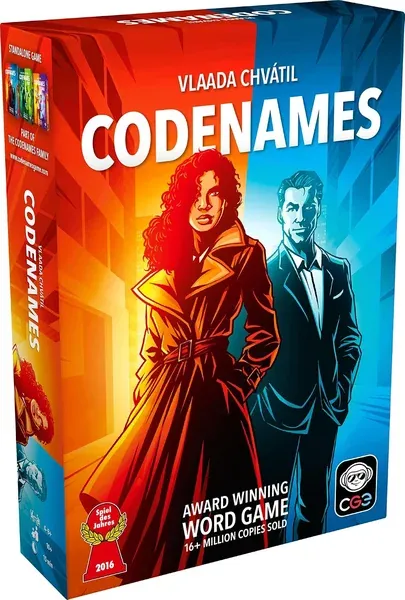
Czech Games Edition
8 min read
7.5/10
· 105,010 ratersShare This Guide
Codenames 2nd Edition: How It Plays, What's New, and Who It's For
BGG community
7.5/10
105,010 raters
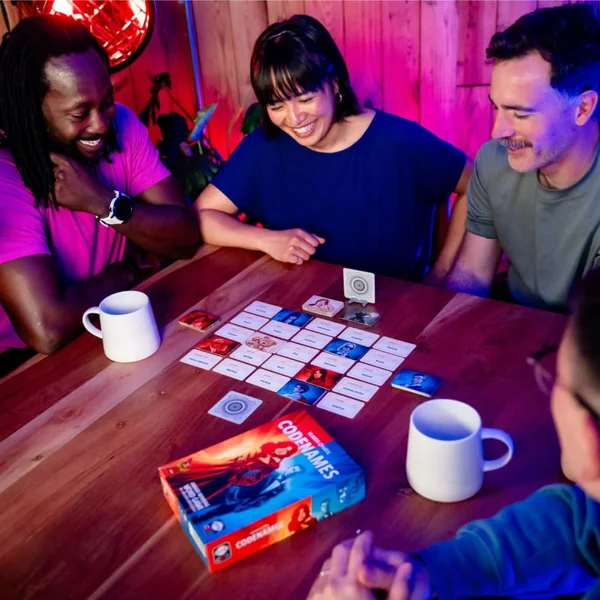
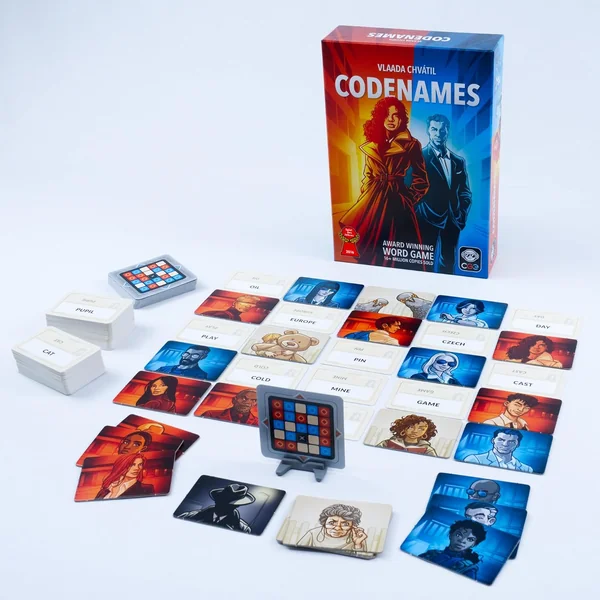
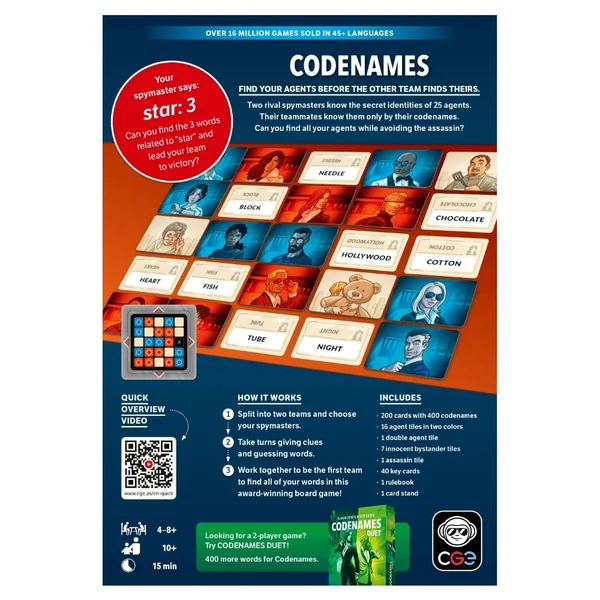
Codenames pits two teams against each other over a 5×5 grid of word cards, with spymasters giving one-word clues to link their agents while dodging bystanders and an instant-loss assassin. The 2025 second edition refreshes the word list, art, insert, and rulebook without changing the rules. It suits groups of four to eight who want a fifteen-minute word game that teaches in five.
Players
2–8
Best at 6 (1,105 votes)
Playtime
15 min
Complexity
1.3/5
2,607 votes
BGG rank
#162
#6 Party Game
Age (BGG poll)
10+
124 votes

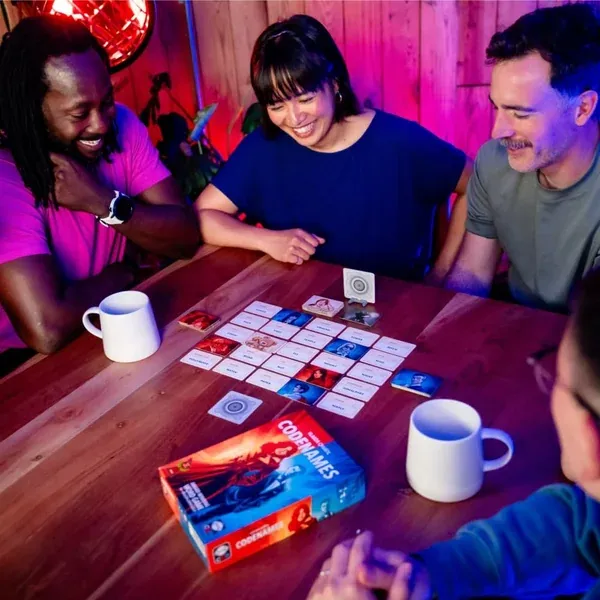
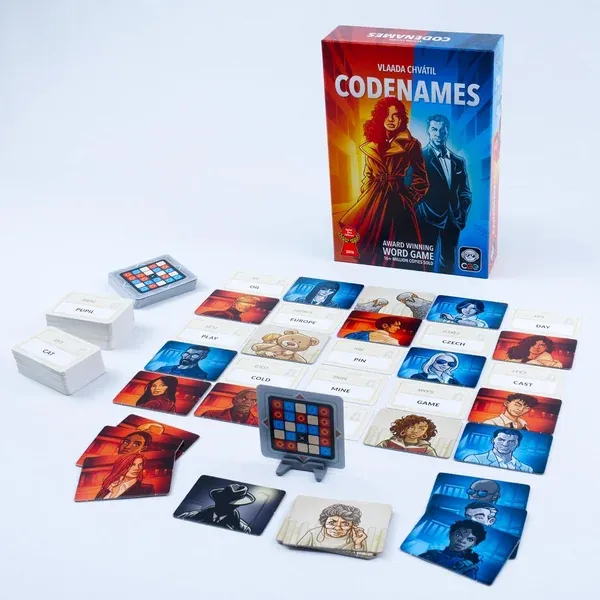
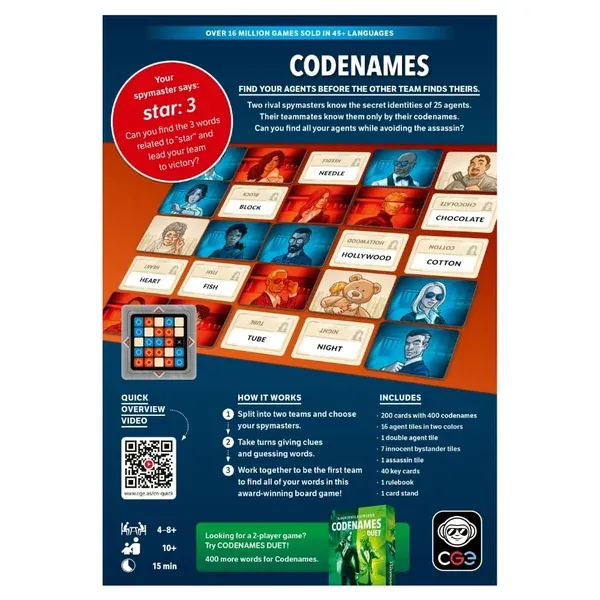 Tap to enlarge
In This Guide
- What Works & What Doesn't
- The Verdict
- What It Is
- How It Plays
- What Your Table Will Argue About
- Player Count, Honestly
- Strategy: What the Numbers Actually Say
- Honest Limitations
- Should You Buy the 2nd Edition?
What Works & What Doesn't
What Works
- Teaches in five minutes and plays in fifteen, with a one-flip reset between games (rulebook, p. 8)
- The one-word clue system produces real deduction and real arguments from almost no rules
- Plus-one, unlimited, and zero clues give experienced spymasters genuine tactical depth
- 200 double-sided word cards and 40 key cards make repeat setups effectively endless
- Free Companion app and a full asynchronous Codenames app extend it beyond the table
What Doesn't
- Opening spymaster clue can stall the table for a couple of minutes — the rulebook itself warns players to be patient (p. 8)
- Clue-legality disputes need adjudication between spymasters; 'spirit of the game' arguments are baked into play (p. 6)
- Crowd-dependent: one 2025 Board Game Review reviewer found it shines only with the right group
- Language-locked in practice — the English edition requires English clues (p. 6), and BGG's poll flags it as unplayable across languages
The Verdict
What It Is
How It Plays
What Your Table Will Argue About
Player Count, Honestly
Strategy: What the Numbers Actually Say
Honest Limitations
Should You Buy the 2nd Edition?
Rules questions, answered from the rulebook
Rules Answers
Every answer below is grounded in the official rulebook and shows the exact passage it rests on — verified against the publisher's PDF, not paraphrased from forums.
Setup & Components
5 answersWhich team goes first in Codenames?
The key card determines who starts: the four triangles on its edge show which team begins. The starting team has one extra word to guess, so they receive the double agent tile flipped to their color.
What is the double agent tile for in Codenames setup?
The double agent goes to the starting team, which is shown by the triangles on the key card. Because that team has one additional word to guess, the tile is flipped to their color and added to their agent tiles.
Where do the spymasters sit in Codenames?
The red and blue spymasters sit next to each other on the same side of the table. Their operatives sit across from them on the opposite side.
Does it matter which side of the key card faces up in Codenames?
No. The spymasters draw the key randomly and slide it into the stand between them, and any side can be up. The four triangles on the edge of the card still indicate which team starts.
Who is allowed to look at the key card in Codenames?
Only the two spymasters may see the key card. It shows the secret identities of all 25 words — which are red, which are blue, which are innocent bystanders, and which is the assassin.
Turns & Actions
3 answersHow do operatives officially make a guess in Codenames?
The operatives should discuss the clue first, and then one of them makes the guess by touching one of the word cards. Touching the card is what counts as the guess — talking about a card doesn't commit you. The spymaster then covers the word with a tile matching the color shown on the key.
What happens if you guess the other team's word in Codenames?
Your turn ends immediately, and the word gets covered with the opposing team's tile, so you have helped them toward victory. This is one of the three kinds of wrong guess that ends a turn, alongside hitting a bystander or the assassin.
Can operatives end their turn early in Codenames?
Yes — if your turn hasn't already ended with a wrong guess, you can stop guessing voluntarily at any point, even after just one guess. The only requirement is that you make at least one guess per turn. This is the safe play when the remaining words for the clue seem too risky.
Edge Cases & Disputes
1 answerAre foreign-language clues allowed in Codenames?
Only if the players in your group would naturally use that word in an English sentence. So strudel is fine, but Apfel is not a valid clue for APPLE and BERLIN.
Player Counts & Variants
2 answersWhat is the "plus one" rule in Codenames?
As long as operatives keep guessing words of their own color, they may guess one more card than the number in the clue — so a clue of cold: 3 allows up to 4 guesses. The extra guess isn't needed on your first turn, but later it lets you pick up a word you missed from a previous turn's clue.
Does Codenames use a timer?
A timer is an optional variant, not a core rule. Some groups prefer to use one to encourage a quicker pace of play, and CGE includes several timers and randomized key cards in the free Codenames Companion phone app.
Sources & Further Reading
The key facts and claims in this guide are grounded in the retrieved, verified sources listed below.
- 1
filemanager.czechgames.com
- 2
BoardGameGeek
- 3
meeplemountain.com
- 4
czechgames.com
- 5
store.czechgames.com
- 6
boardgamegeek.com
- 7
- 8
boardgamereview.co.uk